A shopkeeper for every shopper
Personalisation used to be a big-company privilege. AI is making the shopkeeper's memory cheap enough for every brand, and that changes who wins.
Written by Siddhartha Malani7 min read
Key takeaways
- Small brands lose shoppers because they can't answer everyone. Big brands lose them because they can't tell anyone apart.
- Shoppers sent by AI assistants went from converting 38% worse than other visitors to 90% better in 18 months, in Adobe's US data.
- Translate the whole page, not just the reply, and open it on the colour, size and version the shopper asked for.
- Memory without consent is a liability. Personalise with what shoppers chose to tell you.
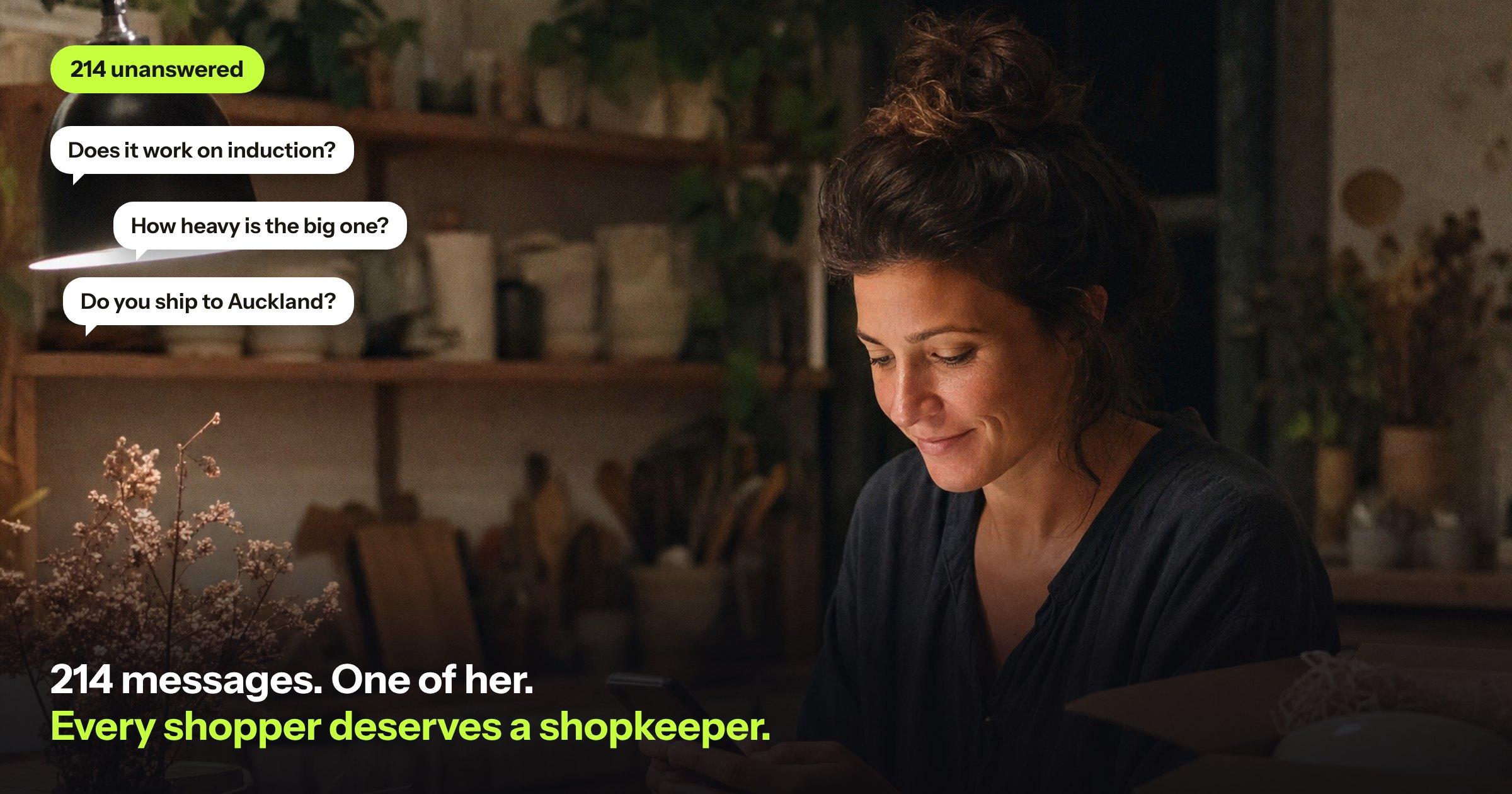
It's 11 pm in Melbourne, and Hana has 214 unanswered messages.
She makes ceramic cookware with one other person, in a studio behind her house. A video of her pouring glaze went further than anything she has ever posted, and now the questions won't stop. Does it work on induction? How heavy is the big one? Do you ship to Auckland?
She answers one properly. Priya, who bought a small dish from her last winter, wants the frying pan. Hana remembers that Priya cooks for six, so she suggests the 28 cm instead and mentions that the handle stays cool. Priya buys two. It takes Hana four minutes. There are 213 to go.
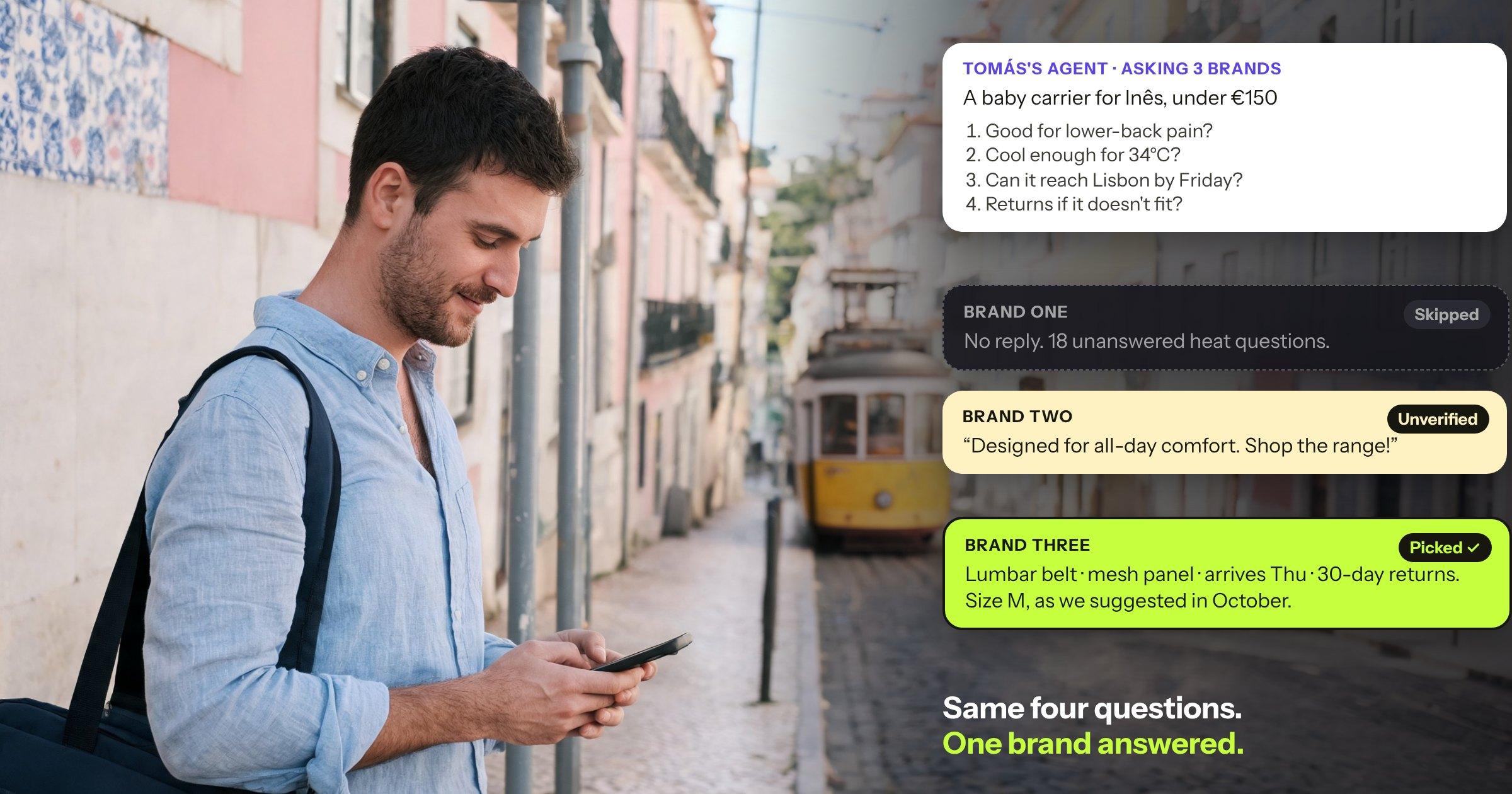
Across the world in London, Marcus runs e-commerce for a national electronics chain. He has the opposite problem. Two million people visit his site a month, and he holds data on all of them. Every one of them gets the same homepage, the same bestsellers and the same banner. A shopper who asked on Instagram whether a TV fits a 70 cm alcove lands on the site as a stranger, like everyone else.
Hana can't answer everyone. Marcus can't tell anyone apart. Both are losing the same thing: the shopkeeper's knack for treating each person as a person.
The shopkeeper's memory just got cheap
For most of the history of online shopping, personalisation meant a data team, a recommendation engine and a budget only large retailers could afford. Even then it mostly meant "people who bought this also bought". That's a long way from remembering that Priya cooks for six.
That's changing fast. On 3 June 2026, Meta launched Business Agent, which replies to customers on WhatsApp, Messenger and Instagram in the brand's tone and the customer's language. It's free to start. By late 2026 more than 2 million businesses were using it every week, according to an SEC filing.
Shoppers are moving just as fast. In March 2025, US shoppers who arrived from AI assistants converted 38% worse than other visitors, according to Adobe. By September 2026 they converted 90% better and spent 83% more per visit, across more than a trillion retail visits Adobe tracks (Retail TouchPoints). Part of that is self-selection, because people who ask an assistant first arrive readier to buy. But the direction is clear: shoppers who were helped to decide buy more.
Personal starts small: language, the piece and the open question
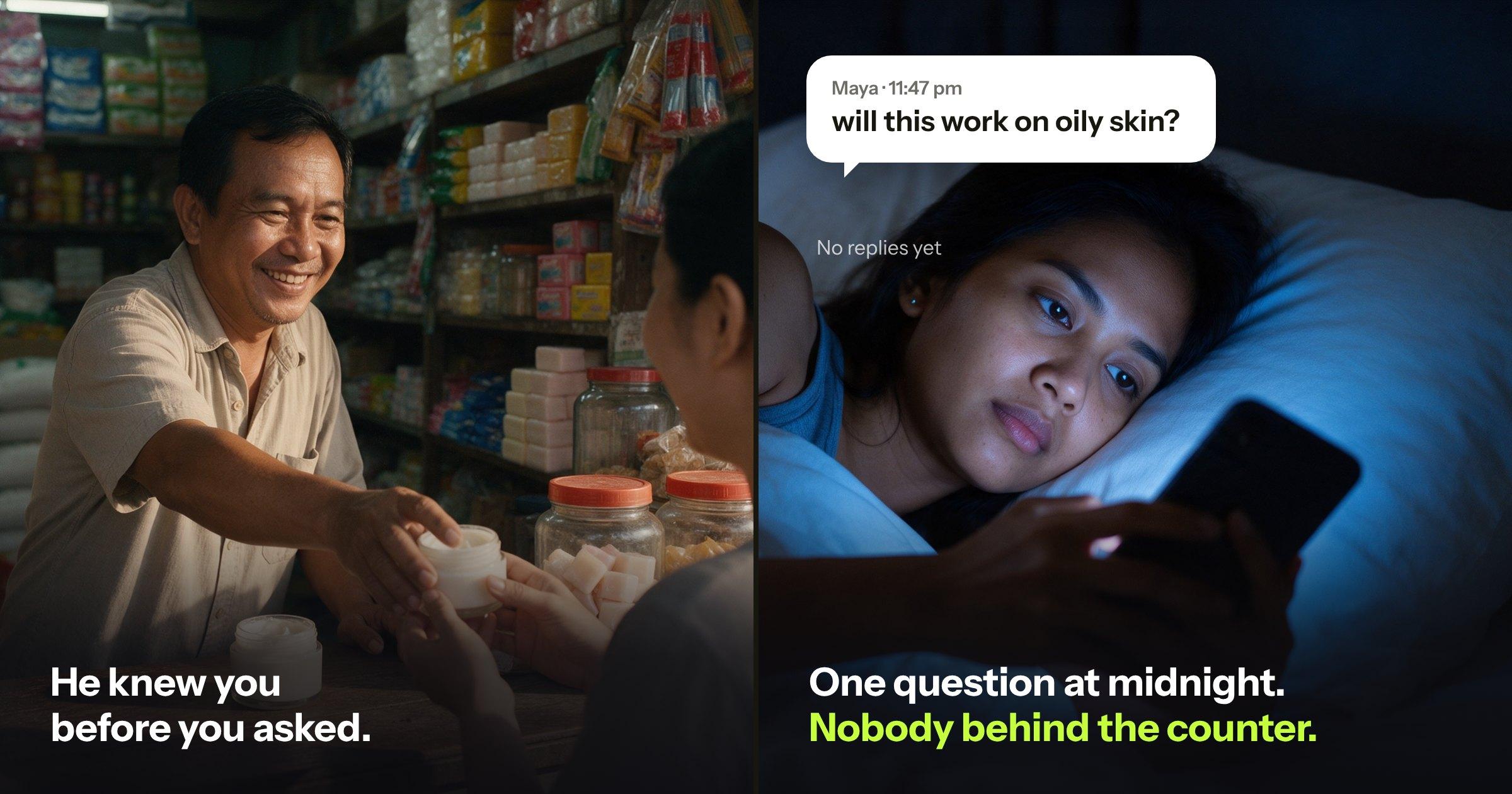
Personalisation sounds grand. In practice the shopkeeper did three things: he spoke your language, he reached for the piece that suited you, and he answered the question you hadn't finished asking. Brands can start with exactly those three.
Language is the shopkeeper's accent, and it has to cover the whole page, not just the chat. When Sofía writes to Hana in Spanish, a translated reply isn't enough. If she taps through to an English page, the doubt comes straight back at checkout. The page itself should open in Spanish: the description, the sizes, the delivery promise, the returns policy and the button. In a survey of 8,709 shoppers in 29 countries, 76% said they prefer to buy with product information in their own language. The survey dates from 2020, but nothing since suggests people have started preferring to be addressed in a stranger's.
The piece comes next. The shopper who asked whether the casserole comes in the sage glaze should land with sage already selected. Someone who asked about the women's version of a running shoe should see women's sizes first, not a unisex grid. Colour, gender, size and budget are things shoppers tell brands in comments and DMs every day. Each one the page already knows is one less tap, and one less reason to leave.
Fit is where returns are won and lost. Zalando says its size tools prevented 8% of size-related returns in 2025 and 9% in 2026, with personalised size advice covering about 70% of its range. That's not a miracle. It's a modest gain that compounds across millions of orders.
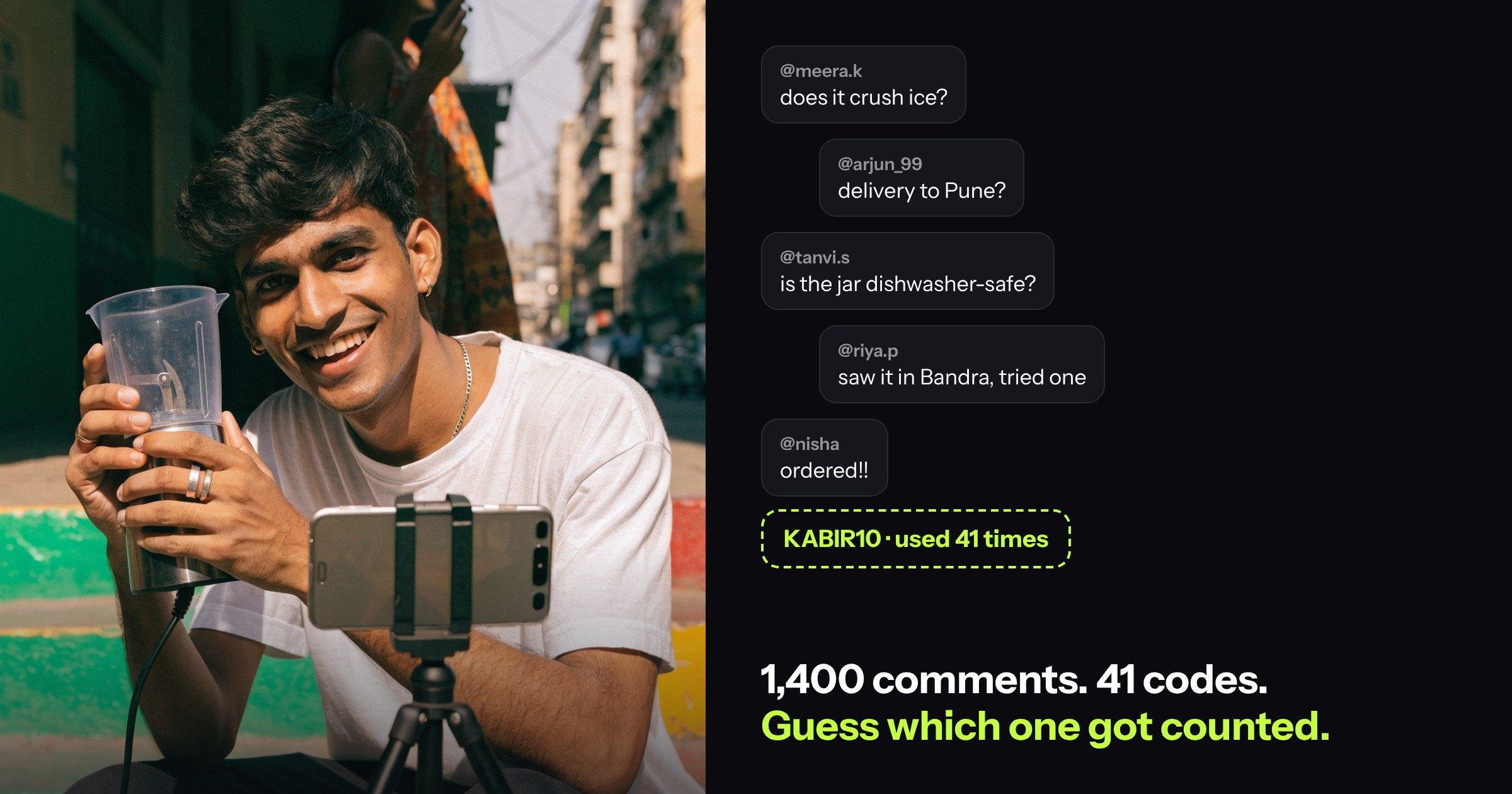
The open question is the one the shopper already asked somewhere else: in a comment, in a DM, under a creator's video. A page that opens with that question answered does more than any recommendation widget.
AI agents will help people choose. Brands still own the sale.
The size of what's coming is hard to overstate. AI agents could orchestrate $900 billion to $1 trillion of US retail sales by 2030, and $3 trillion to $5 trillion worldwide, in a moderate scenario from McKinsey.
But the first experiments carry a useful warning. OpenAI launched checkout inside ChatGPT in September 2025, promising purchases from a huge pool of merchants without leaving the chat. Within six months, press reports said only a few dozen merchants had gone live, and OpenAI moved checkout back to merchants' own sites.
Agents turned out to be good at helping people decide what to buy. The sale, the delivery promise, the returns and the relationship still belong to the brand. A brand that remembers its shoppers is in a far better position when an agent sends one over.
Remember with consent, or don't remember at all
The shopkeeper's memory was built on trust, and so is this. Europe's GDPR already governs how brands use personal data. India's privacy law adds explicit consent and notice duties from 13 May 2027, according to the government's notification. Other markets are moving the same way.
The good news is that the most useful memory is also the easiest to justify: what shoppers chose to tell you, in conversations they started. And most don't mind help that's quick and honest. 69% of consumers say they're comfortable with brands using AI to give them faster service, in Sprout Social's research.
Use what shoppers said, not what you can infer about them. Let them see and change what you remember. And prove it works: compare every personalised page against a group that sees the normal one.
Five ways to give every shopper a shopkeeper
- Start with three signals. Fit, language and the open question will beat any clever recommendation engine.
- Begin with shoppers who started a conversation. They've told you what they need, and they're the most likely to buy.
- Write down your voice. An assistant can only sound like you if you've decided what you sound like.
- Let shoppers see what you remember. Memory people can correct is memory people trust.
- Keep a holdout group. If personalisation isn't beating the normal page, you'll know within a month.
Small brands can look big. Big brands can feel small.
Back in Melbourne, Hana's 214 messages get answered overnight, in her voice. The nine that need her, a wholesale enquiry and a chipped bowl, are waiting at the top of her phone in the morning. In London, the shopper who asked about the 70 cm alcove opens Marcus's site on the TV that fits, with the wall bracket already suggested.
That's what Creatorgoose does today. Our AI agent handles a brand's social conversations in its own voice and remembers what each shopper asked. Then it opens their page translated into their language, with the colour, size and version they asked about already selected and their question answered. Every step it takes out of the way is one fewer place to lose the sale. Book a demo to see how it would work for your brand.
Sources (10)
- Meta, Be there for every customer with Meta Business Agent (3 June 2026)
- Meta Platforms, SEC filing on Business Agent usage (2026)
- Adobe, AI traffic surge on retail sites (April 2026)
- Retail TouchPoints, Adobe: AI traffic driving higher revenue per visit (2026)
- Zalando, returns at Zalando
- CSA Research, Can't Read, Won't Buy: B2C (2020)
- McKinsey, The agentic commerce opportunity (2025)
- OpenAI, Buy it in ChatGPT (2025)
- Press Information Bureau, DPDP Rules 2025 notified
- Sprout Social, social media customer service statistics