The shopper sent an agent. Three brands got the same questions.
Soon the first customer to ask your brand a question won't be a person. It will be their agent, and it will ask your competitors the same thing.
Written by Siddhartha Malani7 min read
Key takeaways
- Agents asking businesses questions for shoppers isn't science fiction. Google already phones businesses for prices and availability, and its product feeds now take Q&A written for AI agents.
- An agent can't be charmed by an ad. It weighs specifics, proof and what other people say: ratings, reviews and your public replies.
- The questions agents will ask are the ones your shoppers already ask in comments and DMs. How you answer them today is your rehearsal.
- Context decides close calls. The brand that remembers who the shopper is, and what they asked before, gives the answer an agent can act on.
It's a Tuesday, a little while from now. Tomás, in Lisbon, has eleven minutes between meetings. He says one sentence to his phone:
"Find a baby carrier for Inês. Her lower back hurts, it's 34 degrees here, under €150, and it has to arrive before Friday."
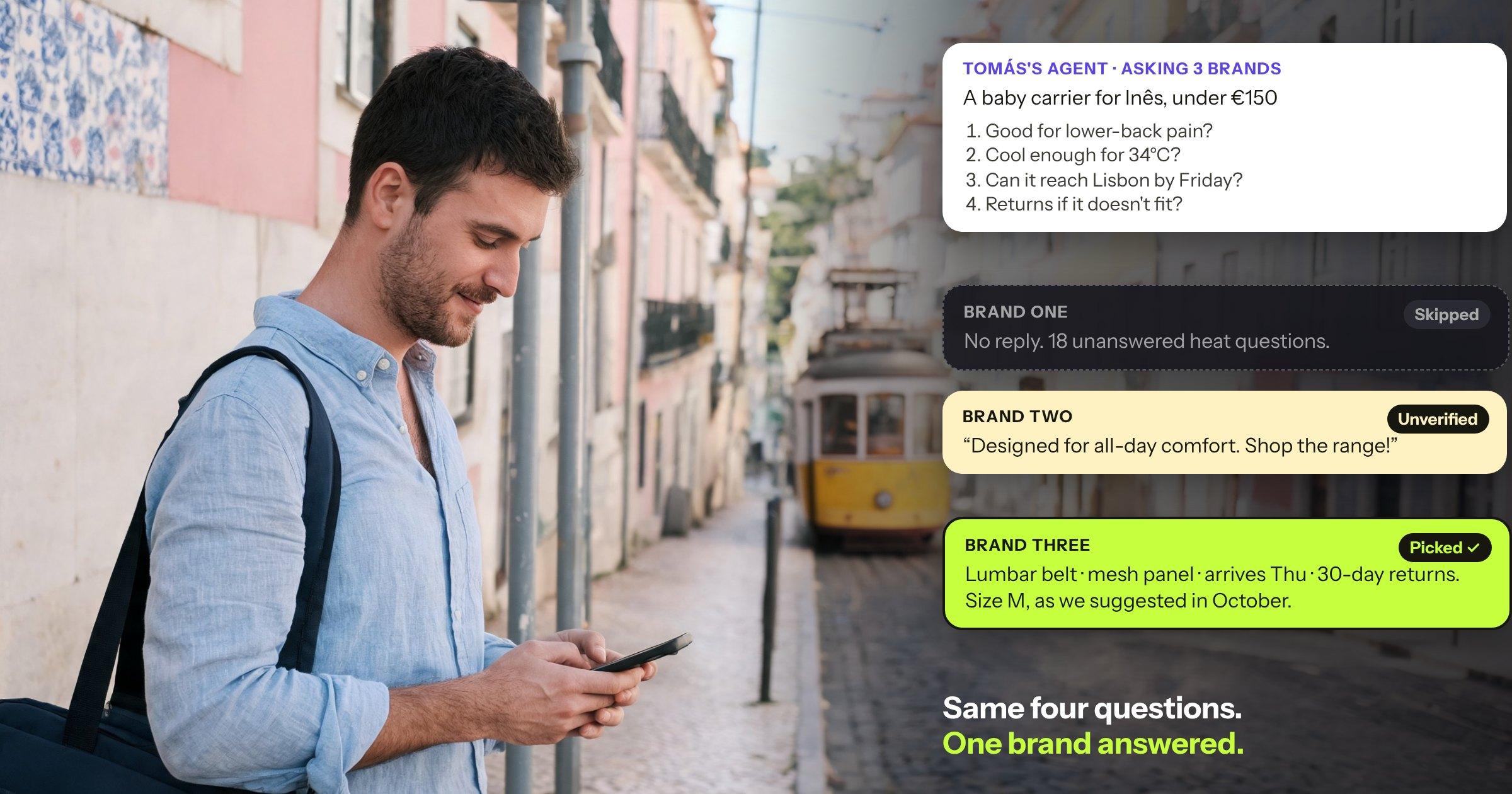
He doesn't open a single website. His agent does the shopping. It finds three brands that make a carrier that might fit, then does what Tomás would never have had time for: it asks each of them the same four questions.
- Is it suitable for someone with lower-back pain?
- Is it cool enough for 34°C?
- Can it reach Lisbon by Friday?
- Can it be returned if it doesn't fit her?
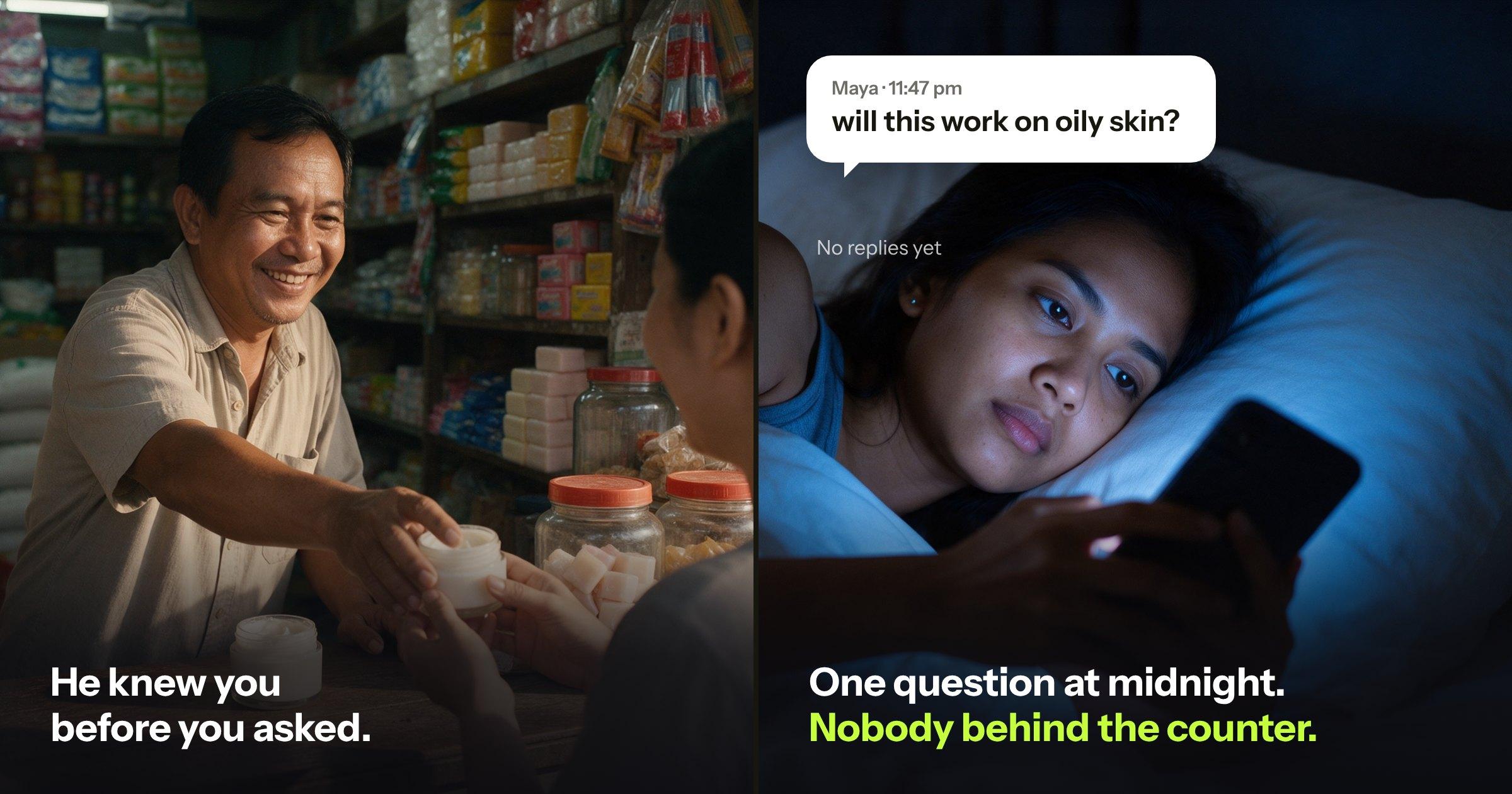
Brand one has no way for an agent to ask anything, so the agent falls back on what's public. Under the brand's last three Reels, the heat question appears 18 times, unanswered. One reviewer mentions back pain, and the brand never replied. The agent can't confirm two of its four questions. It moves on.
Brand two has a chatbot. It replies instantly: "Our carriers are designed for all-day comfort. Shop the range!" None of the four questions is answered. The agent checks the reviews, finds mixed comments about heat, and marks the brand unverified.
Brand three answers all four in under a minute, with specifics. The waist belt is built for lumbar support, and it names the certification. The mesh panel is the one its customers in Seville and Athens use in summer, with a link to the Reel it made after people kept asking about heat. It ships from Porto and arrives Thursday. Returns are free for 30 days, even if worn.
Then it adds one line the others couldn't: Tomás asked about back support under a creator's video in October. We sent him the sizing guide then. Based on that, size M.
The agent comes back to Tomás with one recommendation and four reasons. He taps approve. Brand three makes a sale to a man who never visited its website.
Is this real? In pieces, yes
Tomás, Inês and the three brands are made up. No agent runs his whole errand end to end today. But every step of it has already shipped somewhere, most of it in the last 18 months.
Agents already ask businesses questions. Since July 2025, Google Search has been calling US businesses for prices and availability on users' behalf, and Gemini's newer Call for Me opens by saying it's an AI calling for a named person. Agents already buy: Amazon's Buy for Me completes purchases on brands' own websites. Agents and stores have a common language in Google's Universal Commerce Protocol, and the card networks have payment rails for verified agents. Brands have agents of their own to answer back, from Google's Business Agent in Search to Meta's Business Agent on WhatsApp, Messenger and Instagram.
What isn't here yet is trust. 55% of shoppers who use AI don't fully trust it to complete a purchase (Bain). In March 2026, OpenAI scaled back checkout inside ChatGPT after Walmart found it converted at a third of the rate of sending shoppers to its own site (PPC Land).
So the honest timeline is this. Agents asking questions on a shopper's behalf is here now, at the edges. Agents finishing the whole errand alone is coming, more slowly. Either way, the brand on the other end gets questioned.
What an agent asks, and what it can't see
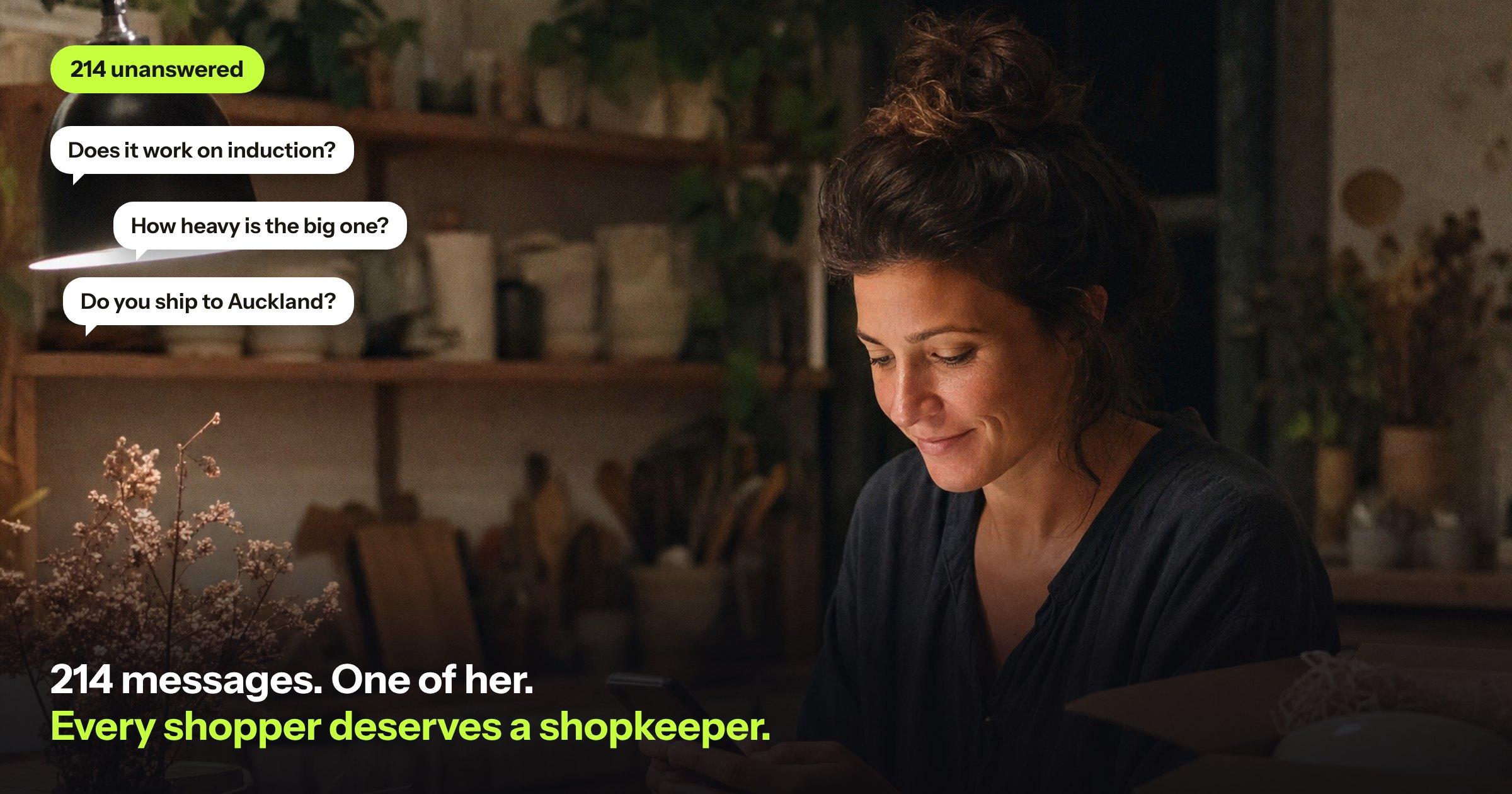
Look at Tomás's four questions again. Will it suit my body? Will it work where I live? Will it arrive in time? Can I send it back? They're the questions shoppers already type under Reels and into DMs every day. An agent doesn't invent new ones. It asks the old ones all at once, of every brand, and it keeps score.
What changes is how answers are judged. People are moved by design and branding; an agent checks whether a product meets the requirements it was given (Shopware). Researchers at Columbia and Yale tested this in a simulated marketplace. The AI agents favoured products with higher ratings and more reviews, and marked down listings tagged "Sponsored" (Allouah et al.).
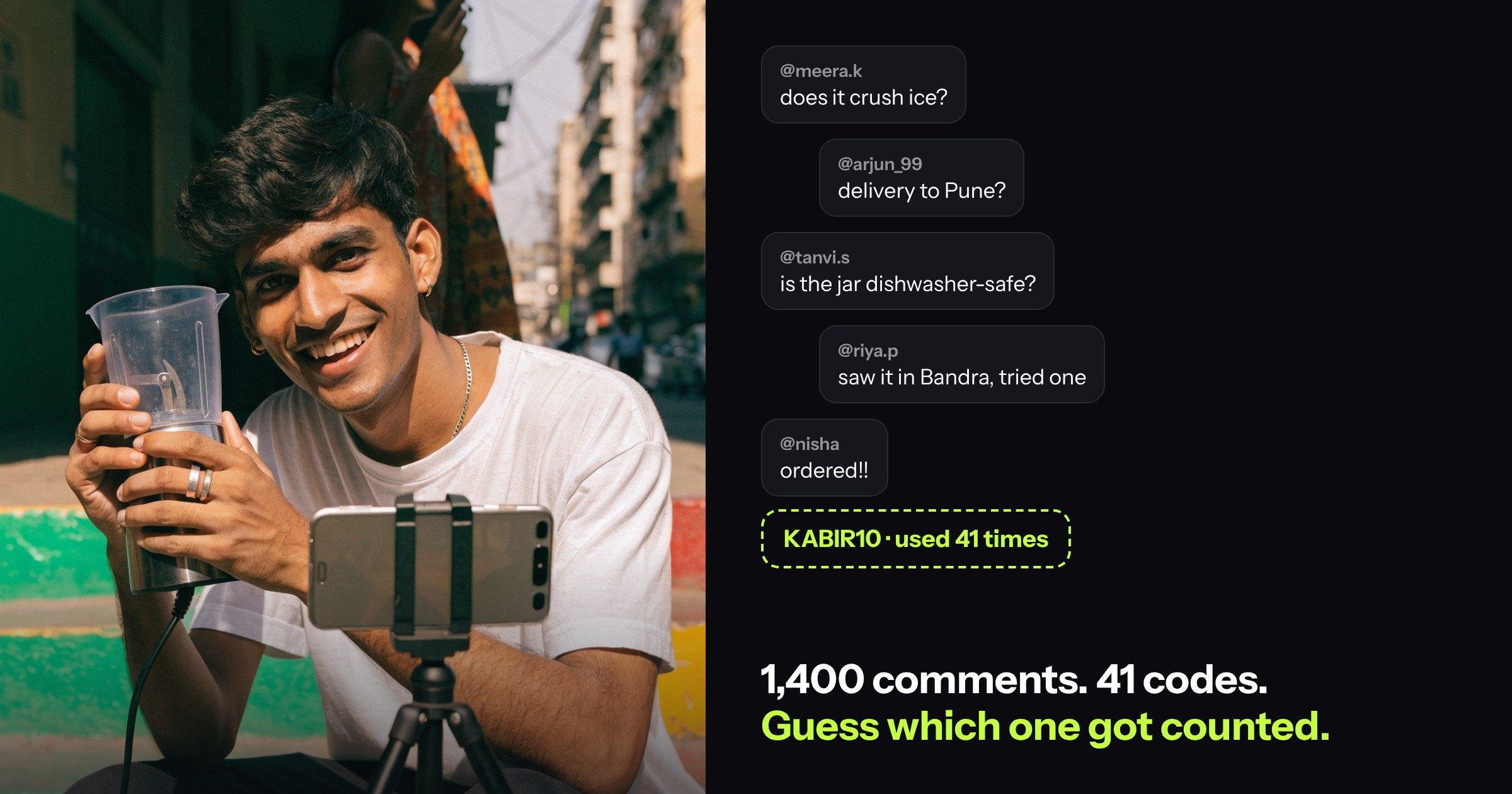
So an agent can't see the mood of your feed or the size of your ad budget. It can see your direct answers, and whether they contain a size, a number or a date. It can see your public record: the comments you answered and the ones you didn't, your review replies, and what your profiles say about stock, shipping and returns. And it can see what everyone else says about you.
Agents also work to a deadline. When Google's AI calls businesses for a shopper, it sends back a summary, usually within about 30 minutes, and businesses are already being told to answer fast and give a real price (Retail Insider). A brand that answers tomorrow morning isn't in the summary.
Why brand three won
Brand three didn't win because it had an agent. Brand two had one too. It won because of habits that started long before Tomás's agent arrived.
- It answered at all. With no answer, the agent falls back on the public record, and silence counts against you. In one study of 800,000 AI answers, brands with no review profile were cited 1% of the time; brands that collected reviews and replied to them, 75% (Seer Interactive).
- It answered specifically. "Designed for all-day comfort" is fluent and useless. "Lumbar belt, mesh panel, arrives Thursday, 30-day returns" is something an agent can check against four requirements.
- Its private answer matched its public one. The agent could see the Reel brand three made about heat, and the replies under it. Brand one's 18 unanswered heat questions told the opposite story. Agents cross-check.
- It remembered. Brand three knew Tomás had asked about back support in October, and what it had told him. Shoppers already expect this: 81% want a conversation to pick up without backtracking (Zendesk). An agent that says who it's shopping for makes that memory usable, as long as the brand only uses what the shopper chose to share.
Underneath all four, brand three had rehearsed. Every question it answered in comments and DMs became a line in its product Q&A, a pinned Reel or a profile update. Google's product feeds now have a question-and-answer field built for AI shopping, and the advice is to fill it with the questions your inbox actually receives (DataFeedWatch). The conversations brands have with shoppers today are the answers their agents will give tomorrow.
Five things to do before the agents arrive
- Answer the questions you already get, every time, within a day. They're the questions agents will ask.
- Answer with specifics. A size, a temperature, a date, a policy. If an answer can't be checked, it isn't one.
- Make your public and private answers agree. Turn repeated questions into posts and pinned replies, and reply to reviews, so the record backs you up.
- Write your answers down where agents read them: product Q&A, profiles and help pages, kept current.
- Remember who asked. Connect comments, DMs and chats into one history per shopper, so the next answer starts where the last one ended, whether the shopper or their agent is asking.
Back to Tomás
Tomás never saw brand three's website, its feed or its ads. What sold him was a set of answers brand three had been giving, one comment and one DM at a time, for months before his agent showed up.
That's what Creatorgoose does today. Our AI agent answers the comments and DMs on your brand's and your creators' posts in your voice, and remembers each shopper across conversations, so every answer is specific and in context. The questions your shoppers ask today are the questions their agents will ask tomorrow. Book a demo to see how it would work for your brand.
Sources (15)
- Make Tech Easier: Gemini "Call for Me" calls businesses for you
- TechCrunch: Google rolls out AI-powered business calling (July 2025)
- Retail Insider: When the first customer to call your business is an AI assistant (Aug 2026)
- Meta: Be there for every customer with Meta Business Agent (June 2026)
- Google Merchant Center Help: Question and answer attribute
- DataFeedWatch: Google's new conversational attributes
- Google: New tech and tools for retailers in the agentic shopping era (Jan 2026)
- Digital Commerce 360: Visa and Mastercard launch agentic AI payment tools
- Amazon: Buy for Me helps customers buy from other brands' sites
- Shopware via Stacker: The rise of agent-to-agent commerce
- Allouah et al.: What is your AI agent buying? (Columbia and Yale)
- Seer Interactive and Trustpilot: How review profiles affect AI visibility (May 2026)
- Small Business Trends: Zendesk CX Trends 2026
- Bain via Retail Technology Innovation Hub: AI shopping answers (Nov 2026)
- PPC Land: Walmart's ChatGPT checkout