She asked one question. Nobody answered.
Social media gave every brand a shop window the size of the planet. It took away the one person who knew who was standing in front of it.
Written by Siddhartha Malani9 min read
Key takeaways
- Shoppers still ask the questions a shopkeeper used to answer. Brands reply to about 7 in every 100.
- The shopkeeper's power was never selling. It was settling doubt, because he knew you.
- Reply tools are everywhere, and answering is going free. They see the message, not the shopper behind it.
- Context is the edge: one shopper across comments, DMs and the site, met with her answer, in her language.
It's 11:47 pm in Jakarta, and Maya is supposed to be asleep.
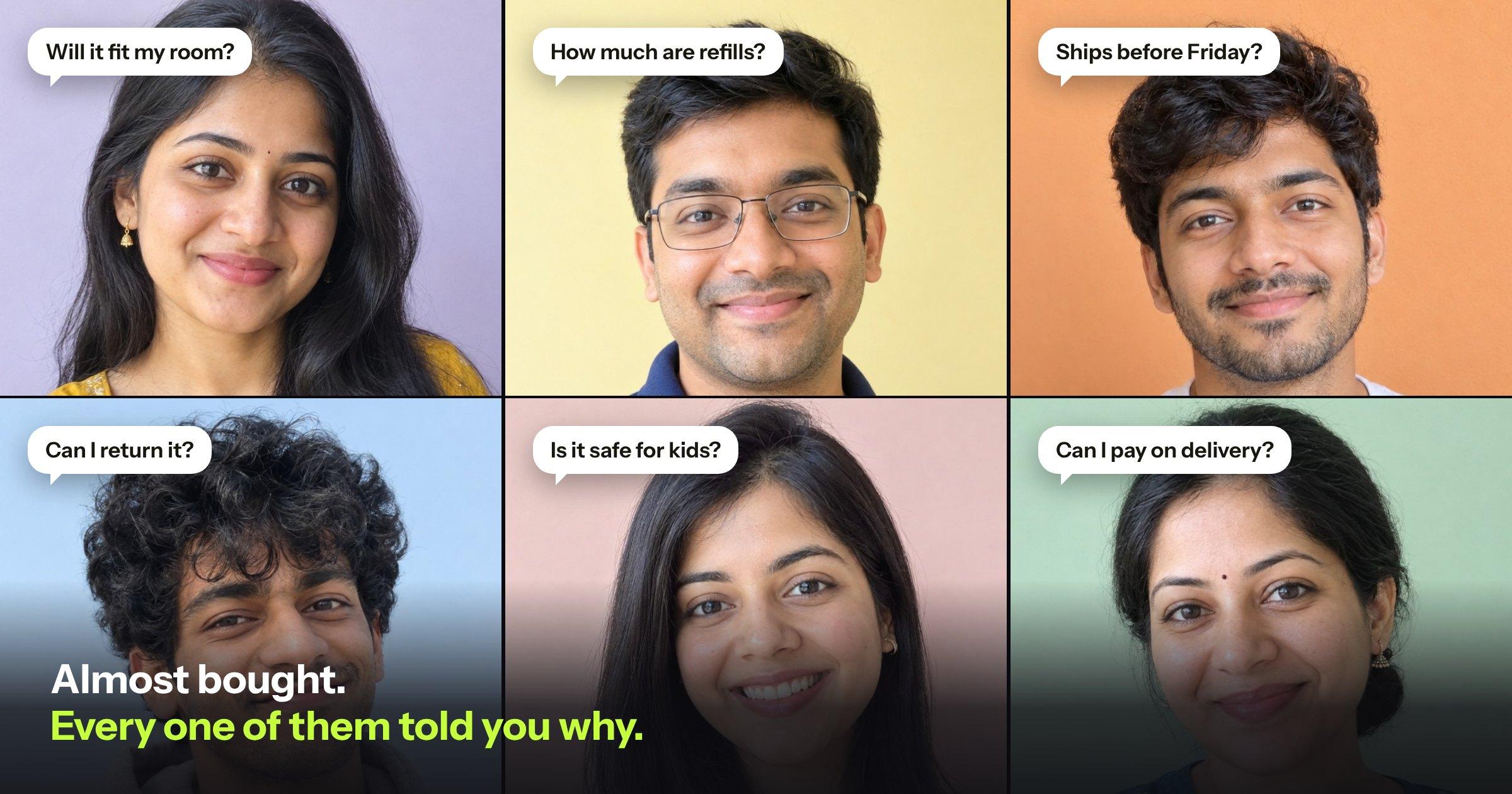
She isn't the only one. Somewhere in Lagos, someone is asking under a reel whether a stroller fits a small car. In Austin, someone wants to know if a pan works on induction. The products change. The doubt doesn't.
Maya's reel is for a face serum from a small brand she's never heard of. The creator's skin looks the way Maya's hasn't since she was nineteen. She taps the comments. Two hundred people have written some version of "need this".
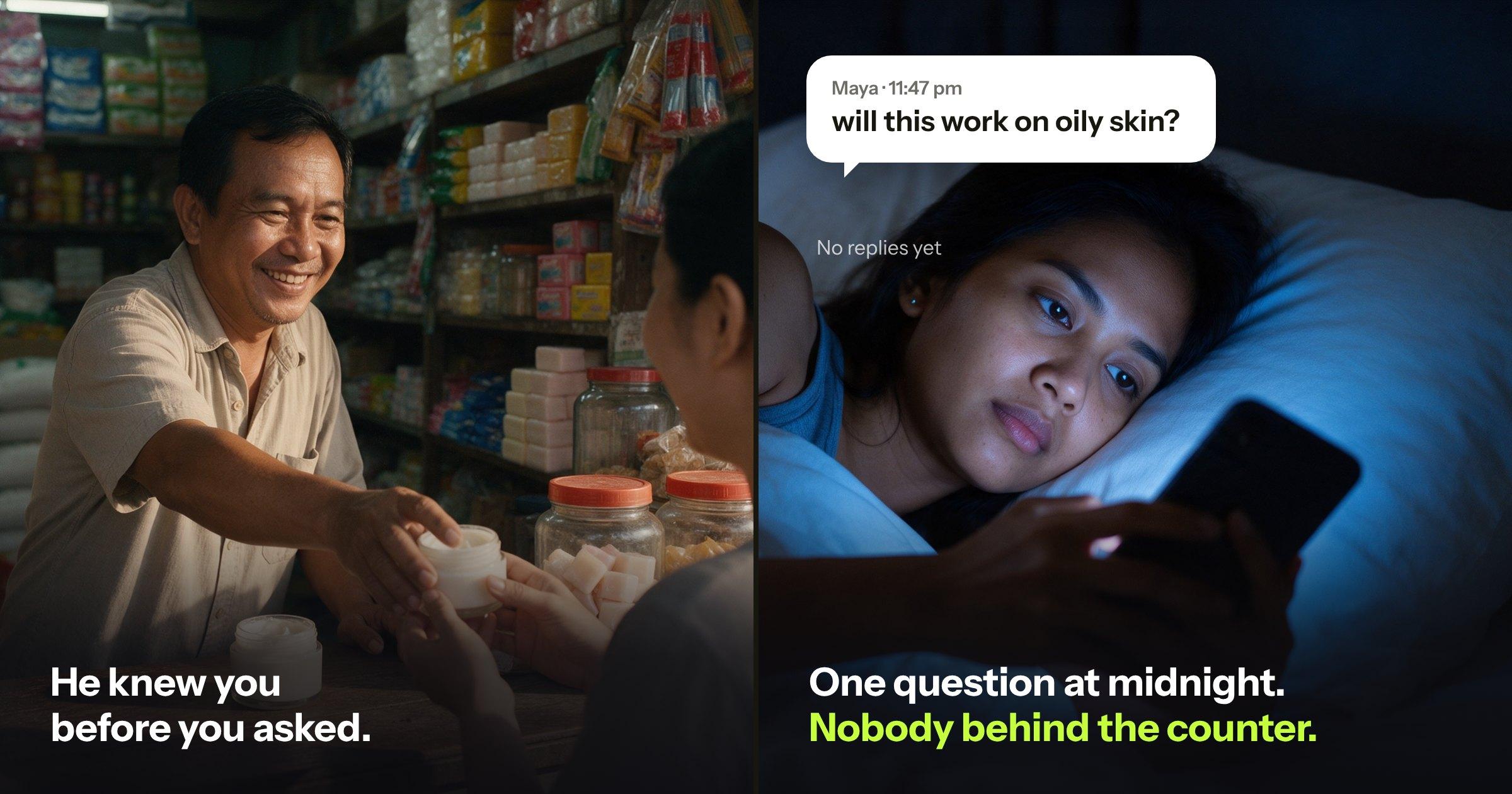
Maya types: will this work on oily skin? Everything breaks me out.
She waits a minute, then the next reel plays, and she's gone.
Nobody answers Maya that night, or the next morning, or ever. That isn't a cruel brand. It's a normal one. Brands reply to about 7% of the messages and comments shoppers send them on social, according to Sprout Social's analysis of nearly 3 billion of them. Maya is in the other 93%, and so are the shoppers in Lagos and Austin.
Three products in three categories, with one question underneath them all: will this work for me? It's exactly the question Maya's mother never had to ask.
The shopkeeper never sold you anything. He settled your doubt.
Thirty years ago, Maya's mother bought almost everything from Pak Hartono's shop, two streets from home: rice, soap, school shoes and the occasional cream for her face. It had narrow aisles stacked to the ceiling and a fan that never quite worked.
She rarely had to explain herself. He'd reach past one face cream for another: "Not that one, Bu, the perfumed one made you itch last year." He knew which rice she bought and that her son couldn't eat peanuts. He knew she'd be back before Lebaran for the school shoes. And when money was short, he let her pay at the end of the month without being asked.
We tend to remember shopkeepers as salesmen who talked people into things. The research says otherwise. Kantar's study of India's neighbourhood stores found most shoppers walk in already knowing what they want. In familiar categories, the shopkeeper sways only 10–15% of purchases. When the shopper is unsure, his influence jumps to 30–40%. He didn't create demand. He protected it at the moment of doubt.
And what protected it was knowing the person, not pushing them. In a field experiment in Mumbai's neighbourhood stores, a shopkeeper's trust, in the form of a little credit, brought customers back far more reliably than a discount did. Being known kept people coming back. Being sold to didn't.
Will it work for me? Is it worth it? Can I bring it back? Can I pay later? Whether she was buying shoes, soap or a school bag, Pak Hartono answered each of these before Maya's mother had finished thinking it.
The scroll replaced the shop. Nobody replaced the shopkeeper.
On Saturday, Maya finds the serum again. It takes her ten minutes, because she can't remember the brand's name. She finds it through the creator's profile, then the brand's page, then the link in its bio.
The product page says it's "suitable for all skin types". Does all include hers? There are 400 reviews, and none of them sounds like her. She adds it to her cart. Then she wonders whether she can return an opened bottle, can't find the answer on her phone, and closes the tab.
She isn't unusual. About 70% of online carts are abandoned, by the Baymard Institute's average of 50 studies, and that number has barely moved in a decade. The shoppers in Lagos and Austin leave theirs too, each over a different doubt.
Now look at Maya's week from the brand's side. Its dashboard is glowing. The reel reached 400,000 people. Followers are up. There were 18 new messages today, and nobody has had time to open most of them. There's one abandoned cart for the serum.
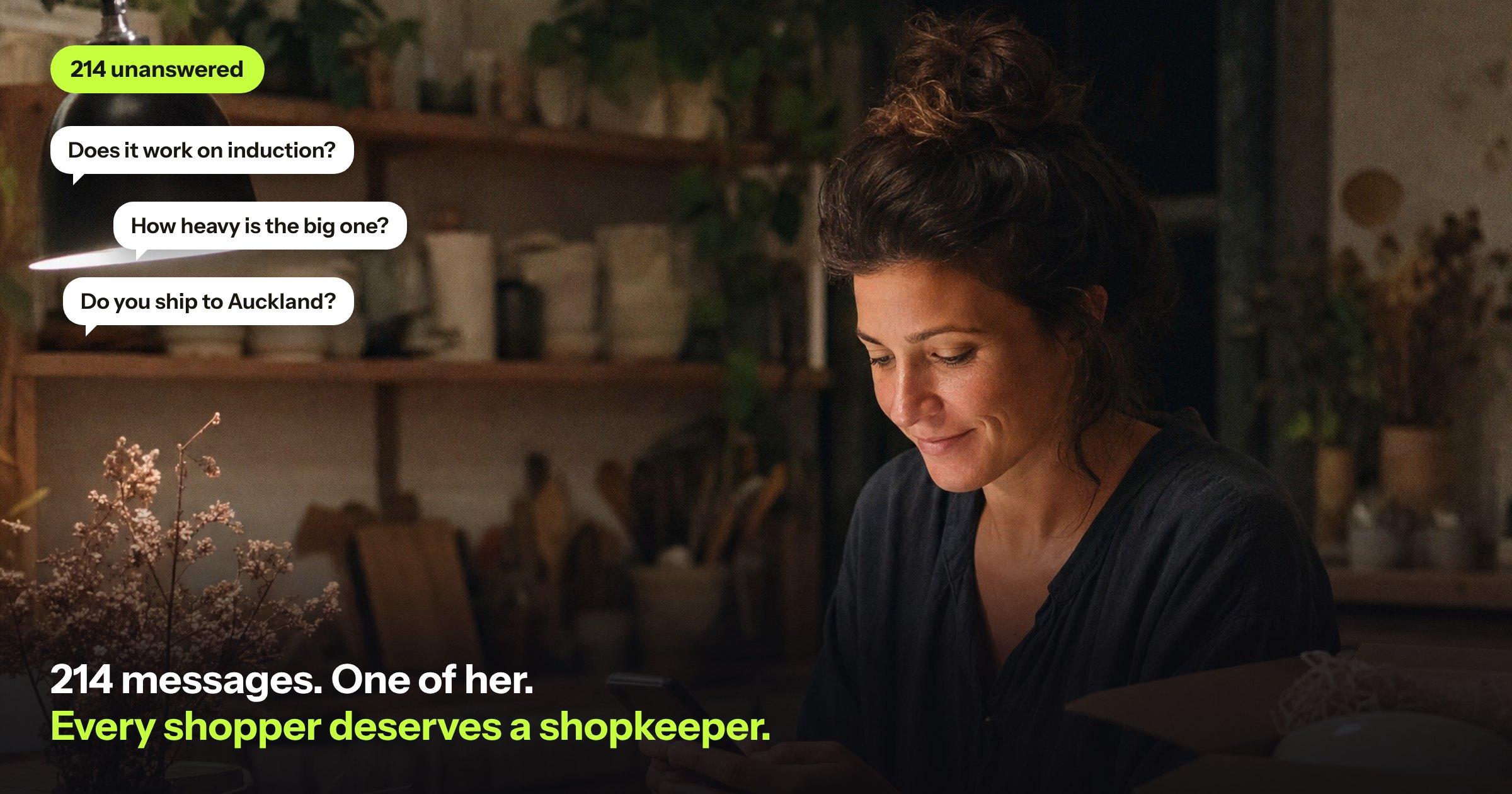
Behind the dashboard is a person. It's 1 am, and the founder is the brand's entire customer team. She opens Instagram and finds 18 new messages and 60 comments. She answers the three that look urgent and promises herself she'll get to the rest tomorrow. Tomorrow there are 20 more. She isn't ignoring Maya. She just can't see her.
What the dashboard can't tell it is that the comment at 11:47 pm and the cart on Saturday were the same woman. She told the brand exactly what was stopping her, and the brand never heard.
That's the trade social media made. Discovery has never been easier: across 54 markets, GWI now ranks social ads alongside word of mouth as a top way people find brands. Every brand got a shop window the size of the planet. What it lost was the counter, and the person behind it who knew who was standing there.
Replying is crowded. Context isn't.
Here's the twist. Maya's next 11:47 pm question will probably get an answer.
Replying to shoppers has become a crowded market. Comment-to-DM tools fire off a link when someone types a keyword. Shared inboxes pull Instagram, WhatsApp and Facebook into one queue. AI bots draft the reply for you. And on 3 June 2026, Meta launched Business Agent, which answers shoppers on Instagram, WhatsApp and Messenger in the brand's tone, free to start. Within months, Meta told investors it was handling more than 30 million conversations a week (SEC filing).
Answering works. In a field experiment at a large online retailer, an AI agent replaced the "no one's available" auto-reply for shoppers with questions before buying. Sales rose by up to 16.3%, and the biggest gains went to the least experienced shoppers. The unsure shopper is the one a good answer moves, which is exactly what Pak Hartono knew.
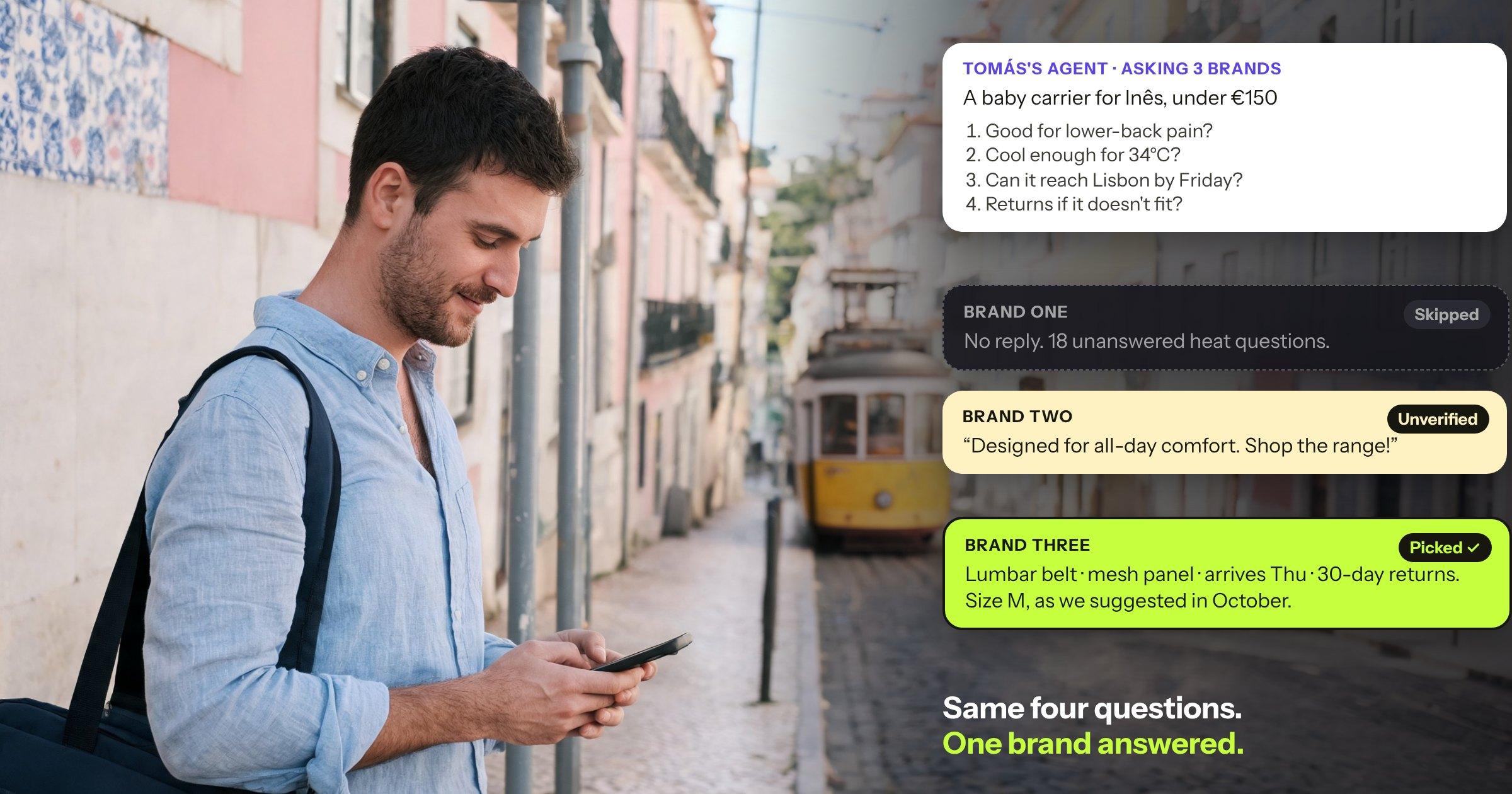
But almost all of these tools treat a message as a ticket: read it, answer it, close it. They see the words Maya typed. They don't see that she's the woman who added the serum to her cart on Saturday and left at the returns policy.
So picture the near future. Maya asks about oily skin, and four seconds later a polite reply says "Yes, it's oil-free and made for combination skin." Then on Saturday she taps through to the site, and it greets her as a stranger. Same "all skin types". Same unanswered question about returns. The brand answered her, then forgot her.
- A reply tool sees one message. Context sees one shopper: the comment on Thursday, the DM on Friday and the cart on Saturday.
- A reply tool answers the question she typed. Context answers the doubt behind it, oily skin, and the one she hasn't asked yet, returns.
- A reply tool sends a link to the homepage. Context sends her to the serum, with her answer on the page, in Bahasa.
- A reply tool reports messages answered. Context reports which conversations became orders, and what they were worth.
When every brand can reply instantly, the reply stops being an advantage. It becomes the floor. Pak Hartono didn't win because he answered quickly. He won because he knew who was asking.
What remembering every shopper looks like
Here's the version of Maya's week the best brands will build.
Maya asks about oily skin at 11:47 pm and gets an honest answer. On Saturday she taps through, and the whole page opens in Bahasa, because that's how she wrote: the serum, her answer pinned under the price (made for oily, breakout-prone skin) and the returns policy for opened bottles spelled out. She buys in under a minute. She keeps it, because it works. Six weeks later, when she's about to run out, the brand knows exactly who to remind.
The same could happen for the stroller in Lagos and the pan in Austin. Different products, the same move: the brand remembers what each of them asked and starts from there.
None of that needs a bigger audience. The brand already had Maya's attention. It needed what Pak Hartono had: a memory of who she was.
Our prediction: within a few years, the brands that grow fastest online won't be the ones that shout loudest in the feed. They'll be the ones that remember the shopper who asked a question at midnight when she comes back on Saturday.
Five ways to stop losing shoppers in your comments and DMs
- Read your comments and DMs as research, not a support queue. Tag each question by the doubt behind it: price, suitability, payment, delivery or trust.
- Answer the doubt, not just the question. "Price?" often means "is this worth it for me?" Reply with the price and the next step.
- Treat one shopper's questions as one conversation. A comment on a reel and a DM two days later are the same person.
- Stop sending everyone to the homepage. Send each shopper where their question points: the product they asked about, with their answer on the page.
- Measure the counter. Track your counter conversion rate: the share of shoppers who asked a question and then went on to buy. Most brands have never looked.
Building Pak Hartono back
The shopkeeper never had a CRM. He had attention and memory. Brands now have more attention than any shop in history. What they need next is the memory.
That's what Creatorgoose does today. Plenty of tools will help you reply faster. We start from context. Our AI agent answers comments and DMs in your brand's voice, connects each conversation to the same shopper on your site, and opens her page in her language, with her question already answered and the product she asked about in front of her. Reply tools count messages answered. We count the shoppers who bought.
The next Maya should be greeted the way Pak Hartono would have greeted her mother. Book a demo to see how it would work for your brand.
Sources (9)
- Sprout Social, social media customer service statistics (2025 Content Benchmarks Report and Sprout Social Index)
- Kantar, The myth of the kirana shopkeeper's influence (2026)
- London Business School, Between trust and trade: informal credit networks in India (2026)
- Baymard Institute, cart abandonment rate statistics
- NRF and Happy Returns, 2025 Retail Returns Landscape
- GWI, Brand discovery in 2026
- Meta, Be there for every customer with Meta Business Agent (3 June 2026)
- Meta Platforms, SEC filing on Business Agent usage (2026)
- Fang, Yuan, Zhang, Donati and Sarvary, Generative AI and Sales Productivity (working paper, 2026)