Brands know who bought. They don't know who almost did.
Ad platforms are getting better at finding buyers and worse at telling brands who those buyers are. The money sits with the shoppers in between.
Written by Siddhartha Malani7 min read
Key takeaways
- Meta's average price per ad rose 14% in a year while the ads it showed grew 10%. Brands are paying more to meet strangers.
- About 7 in 10 carts are abandoned, and the reasons shoppers give are the questions they type into DMs.
- Join comments, DMs, page visits and carts for each shopper, and the middle becomes a named audience: who, what product, what value, what doubt.
- Bring them back with the answer to their doubt, on a page made for them, not the same ad again.
It's a Tuesday evening in São Paulo, and Ana has three tabs open about the same air purifier.
Her daughter's allergies are worse this winter. The purifier turned up in a reel that afternoon: a creator walking through a small flat while the little display on the machine turned from red to green. Ana tapped through, then went to the brand's Instagram and sent a DM: does it work in a 30 m² room? And how much are the filters?
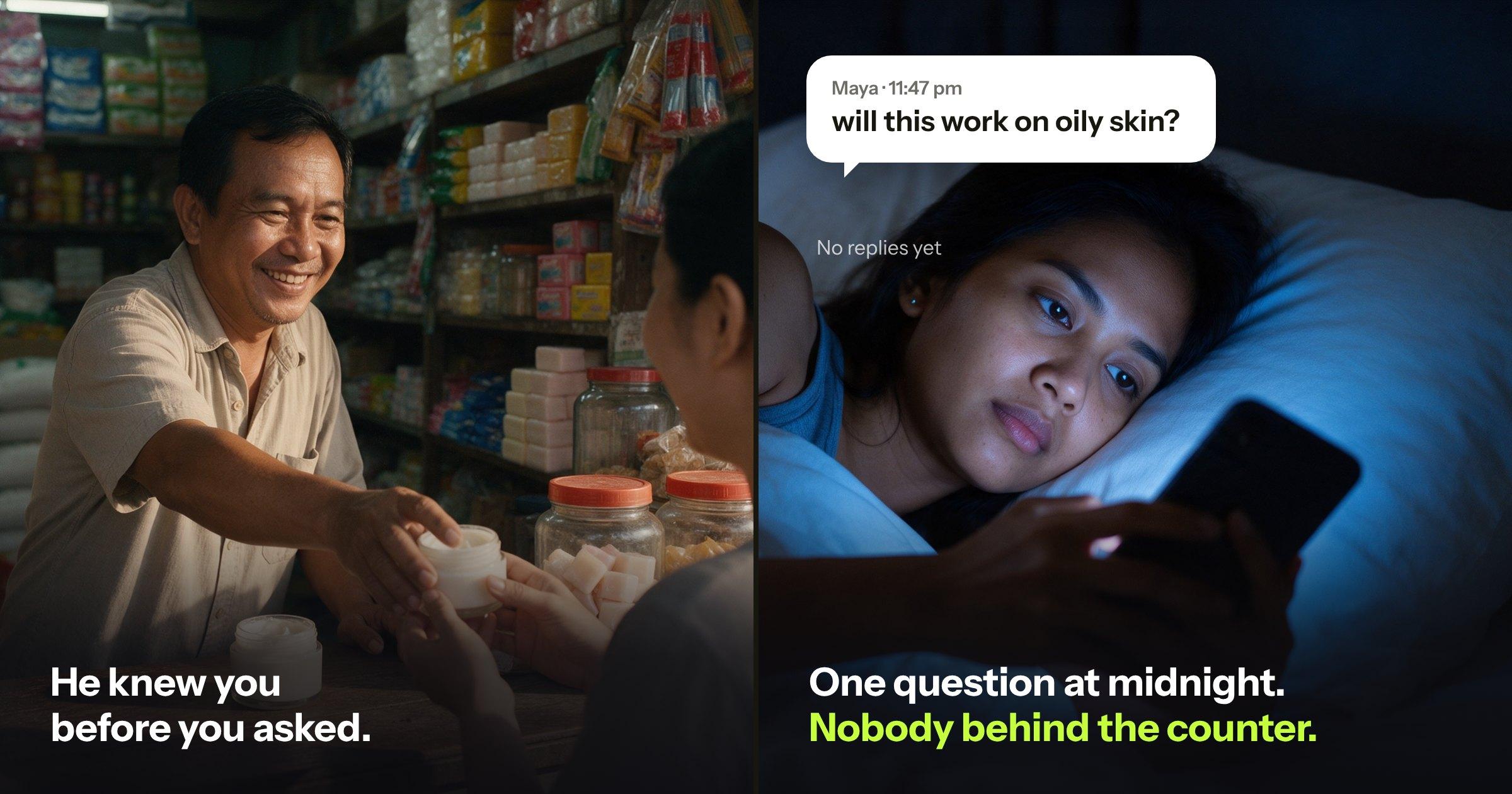
An automatic reply came back in a second: Thanks for reaching out! We'll get back to you soon. Nobody did.
She added it to her cart anyway, then stopped at the total. R$ 1.290 felt like a lot for a box she couldn't hear running, with filters she couldn't price. She closed the tab.
For the next three weeks, the purifier followed her everywhere: in her feed, in her stories, between two videos about something else entirely. Still thinking about it? the ads asked. She was. Nobody asked what about.
Your dashboard sees two kinds of people. Neither of them is Ana.
Ad platforms are very good at two moments: the click and the purchase. Everything in between shows up as a line going down. The hesitation, the question, the comparison, the tab closed at the total: none of it has a column.
That blind spot is getting more expensive. In the third quarter of 2026, Meta's average price per ad rose 14% on a year earlier while the number of ads it showed grew 10%, according to its quarterly filing. It was the first time in five quarters that price grew faster than reach. Brands are paying more to meet strangers.
At the same time, the platforms are asking brands to know less. Automated campaigns now choose the audience themselves, from the creative and from signals only the platform holds. That works well for finding buyers. It tells a brand almost nothing about who nearly bought, or why they stopped.
The money sits in the middle
Ana isn't unusual. About 70% of online carts are abandoned, by the Baymard Institute's average of 50 studies. When Baymard asks shoppers why, setting aside those who were just browsing, the top answers are extra costs, slow delivery, not trusting the site with their card, and the returns policy.
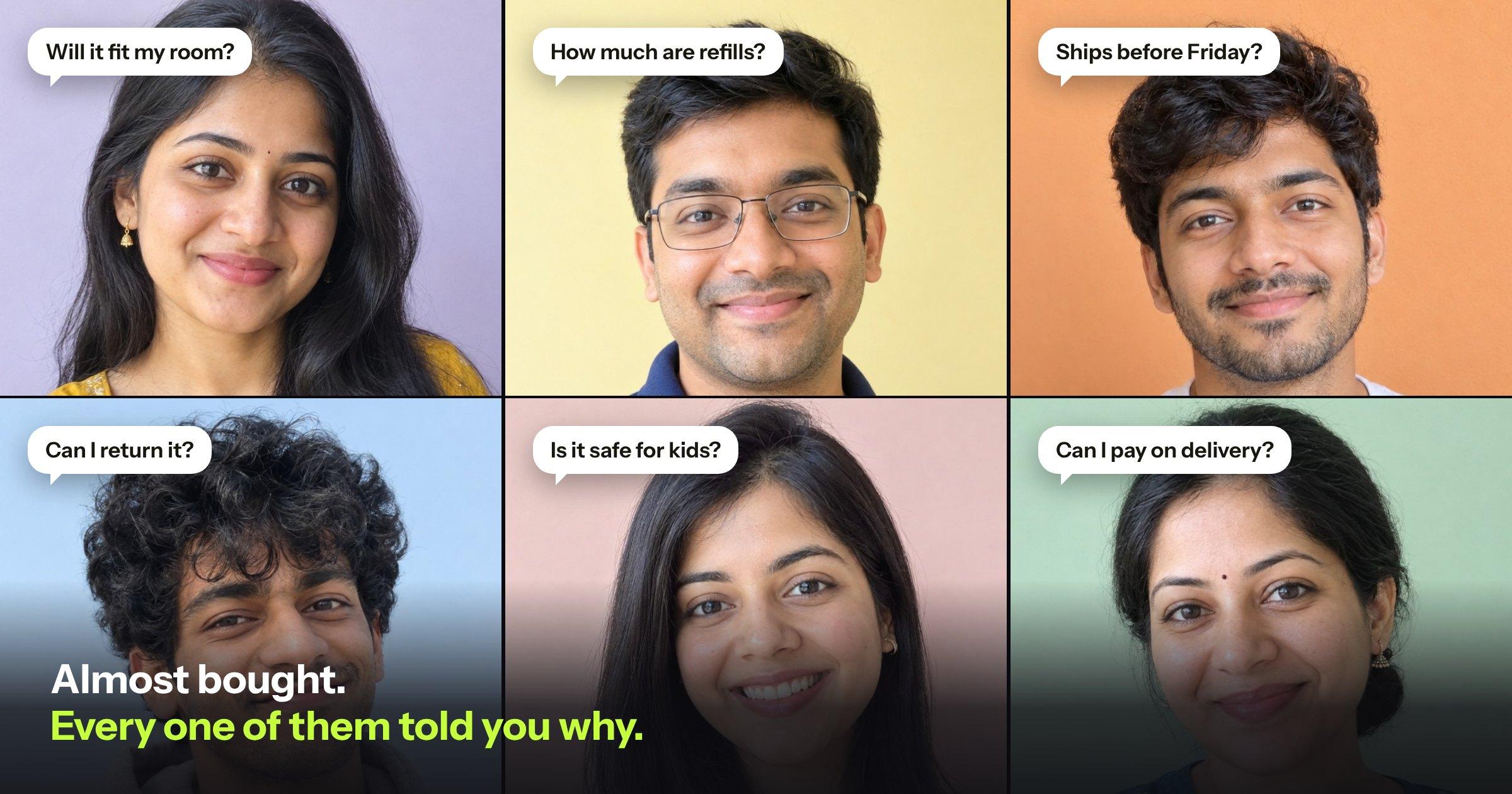
Read that list again. Every item on it is a question. What will this really cost? When will it arrive? Can I trust you? Can I send it back? Shoppers rarely leave because they stopped wanting the thing. They leave because a doubt went unanswered.
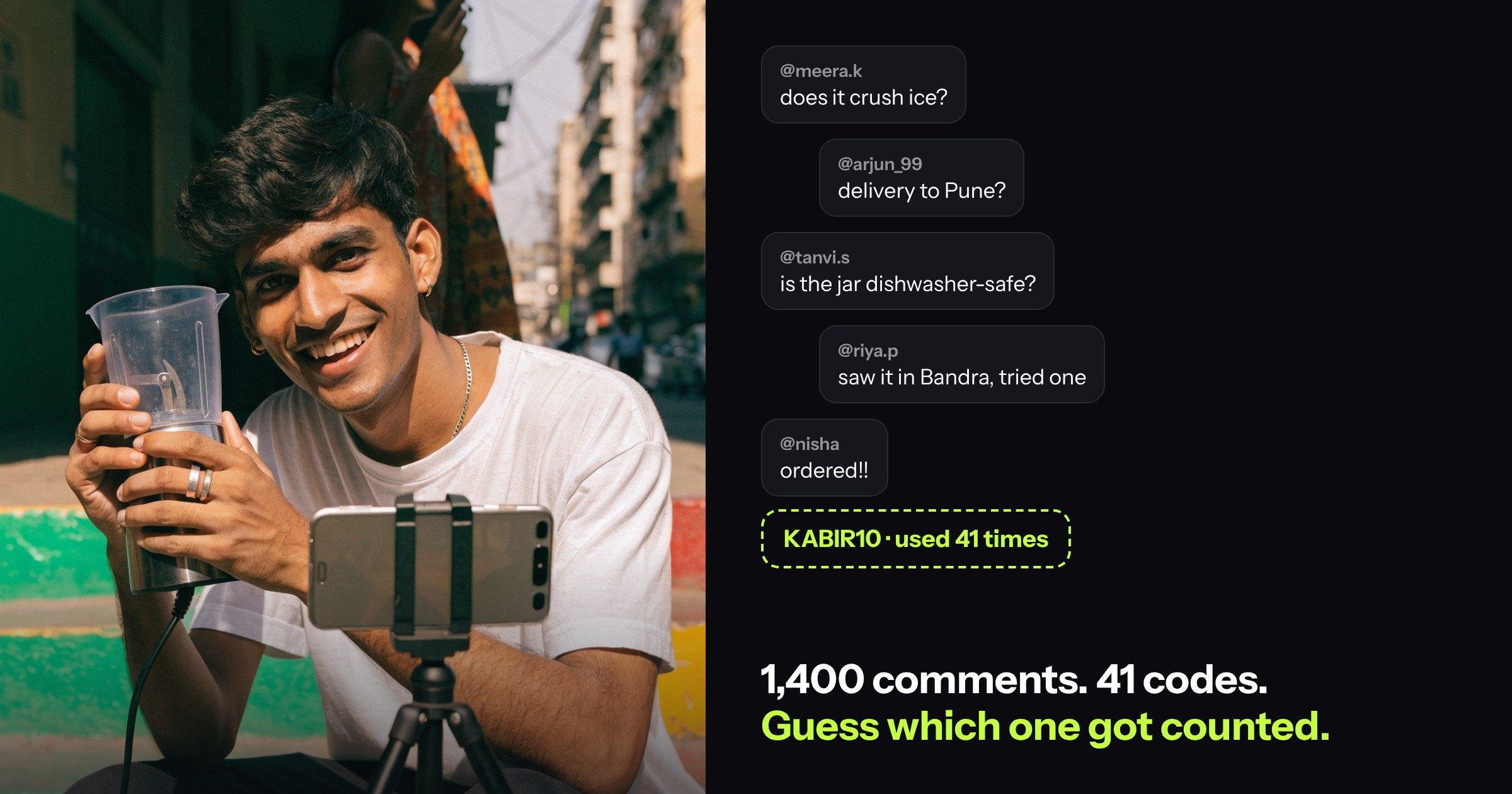
And they say so, in writing. Brands reply to about 7% of the messages and comments shoppers send them on social, according to Sprout Social. The other 93% is the most precise record of hesitation a brand will ever own, and it sits unread in an inbox.
First, find out who almost bought
Most brands can't name a single shopper in the middle. The signals exist, but they're scattered: a DM in Instagram, a comment under a creator's reel, two visits to a product page, a cart left at the total. Each lives in a different tool, so nobody adds them up.
Put them on one timeline per shopper and the middle gets names. Ana stops being a bounce in an analytics chart. She's a shopper who came from a creator's reel, asked about room size and filter price on Tuesday, opened the purifier page twice, reached the cart at R$ 1.290 and stopped. That's an almost-buyer, with a product, a value and a reason.
Add up a month of them and a brand can see what its dashboard never showed:
- Who: every shopper who showed real intent and didn't buy, and where they came from: a creator's reel, an ad or the brand's own post.
- What: the product and variant they wanted, and the value they left in the cart.
- Why: the doubt they raised, in their own words: price, delivery, fit, trust or returns.
- When: how recently, so the warmest shoppers are followed up first.
That list is worth more than any lookalike audience, because these people have already chosen the product. They're waiting for a reason.
Retargeting chases the person, not the reason
Think about what Ana's three weeks of ads bought. Every impression repeated a message she had already seen and answered a question she never asked. The ad knew she'd looked. It didn't know she needed two numbers: square metres, and the price of a filter.
Answers are what move people like Ana. In a field experiment at a large online retailer, replacing the "no one's available" reply with an AI agent that answered questions before purchase raised sales by up to 16.3%. On Alibaba, shoppers who used live chat were about 16% more likely to buy, even after allowing for the fact that keener shoppers chat more, a peer-reviewed study found. In China, asking the seller before you buy has simply been how online shopping works for a decade.
The money is starting to follow. Meta's revenue from ads that open a WhatsApp chat grew 60% in a year to the third quarter of 2025 (earnings call), and WhatsApp's paid messaging has passed a $2 billion annual run-rate (earnings call). Brands are paying to start conversations. Most still aren't reading the ones shoppers start for free.
An answer only works if it sounds like someone who knows you
There's a catch, and it matters. In a field experiment with more than 6,200 customers, people who were told a sales call came from a chatbot bought far less than those who weren't told, even though the bot sold as well as experienced staff when nobody knew.
The lesson isn't to hide the machine. Shoppers punish replies that feel generic, like the one Ana got. An answer has to sound like the brand, and it has to know who it's talking to. That means it remembers that she has a 30 m² flat and a daughter with allergies, and it never sends her the same canned line twice.
Turn the almost-buyers into an audience you can market to
Now replay Ana's week. Her DM is read the moment it arrives and tagged with two doubts: room size and running cost. Instead of three weeks of the same ad, she gets one reply in her DM, in the brand's voice. It covers rooms up to 35 m², filters last a year and cost R$ 149, and here's the purifier, already in your cart, in 10 interest-free instalments.
Then do it for everyone. Group last month's almost-buyers by the doubt they raised: price, delivery, fit, trust, returns. Each group becomes an audience the brand can reach again, in the DM thread the shopper started or in retargeting that shows the answer instead of the same creative. Shoppers who have already bought drop out of it the same day.
That's an audience no ad platform can build for a brand, because no ad platform has read the brand's DMs.
Five ways to win back the shoppers who almost bought
- Put names on the middle. Join DMs, comments, page visits and carts into one timeline per shopper, then count who almost bought and what they left behind.
- Sort them by doubt, not demographics. Price, delivery, fit, trust and returns each need a different answer.
- Retarget with the answer. One ad that settles the doubt beats ten that repeat the offer.
- Stop paying to chase people who've already bought. Feed your buyers back into your exclusions every day.
- Answer like the brand would. Be open that it's an assistant, and make it good enough that it doesn't matter.
Bringing back the ones who almost bought
Six weeks later, Ana did buy a purifier. A different brand's. Its reel showed the size of the room on screen, and when she asked about filters, someone answered in four minutes.
That's what Creatorgoose does today. We find the shoppers who almost bought, from their comments, DMs, visits and carts. We show you what each one wanted, what it was worth and what stopped them, and turn them into an audience you can bring back.
And when they come back, the page picks up where they left off: in their language, on the model and colour they looked at, with their question already answered. That's the difference between a reminder and a reason to buy. Book a demo to see how it would work for your brand.
Sources (8)
- Meta Platforms, Q3 2026 results (Form 8-K, Exhibit 99.1)
- Baymard Institute, cart abandonment rate statistics
- Sprout Social, social media customer service statistics
- Fang, Yuan, Zhang, Donati and Sarvary, Generative AI and Sales Productivity (working paper, 2026)
- Impact of Live Chat on Purchase in Electronic Markets, Information Systems Research
- Meta Platforms, Q3 2025 earnings call transcript
- Meta Platforms, Q4 2025 earnings call transcript
- Luo, Tong, Fang and Qu, Machines versus Humans, Marketing Science (2019)